If you've landed on this blog by mistake, please follow this link:
www.Kentucky.PreppersNetwork.com Please update your bookmarks and the links on your sites. The KY forum is still the same URL: www.KentuckyPreppersNetworkForum.com
Join our forum at:
Showing posts with label Homeowner Preparedness. Show all posts

January 22, 2010

What to Do During an Earthquake

Source: FEMA.gov

Stay as safe as possible during an earthquake. Be aware that some earthquakes are actually fore shocks and a larger earthquake might occur. Minimize your movements to a few steps to a nearby safe place and stay indoors until the shaking has stopped and you are sure exiting is safe.
If indoors

* DROP to the ground; take COVER by getting under a sturdy table or other piece of furniture; and HOLD ON on until the shaking stops. If there isn’t a table or desk near you, cover your face and head with your arms and crouch in an inside corner of the building.
* Stay away from glass, windows, outside doors and walls, and anything that could fall, such as lighting fixtures or furniture.
* Stay in bed if you are there when the earthquake strikes. Hold on and protect your head with a pillow, unless you are under a heavy light fixture that could fall. In that case, move to the nearest safe place.
* Use a doorway for shelter only if it is in close proximity to you and if you know it is a strongly supported, load bearing doorway.
* Stay inside until shaking stops and it is safe to go outside. Research has shown that most injuries occur when people inside buildings attempt to move to a different location inside the building or try to leave.
* Be aware that the electricity may go out or the sprinkler systems or fire alarms may turn on.
* DO NOT use the elevators.

If outdoors

* Stay there.
* Move away from buildings, streetlights, and utility wires.
* Once in the open, stay there until the shaking stops. The greatest danger exists directly outside buildings, at exits, and alongside exterior walls. Many of the 120 fatalities from the 1933 Long Beach earthquake occurred when people ran outside of buildings only to be killed by falling debris from collapsing walls. Ground movement during an earthquake is seldom the direct cause of death or injury. Most earthquake-related casualties result from collapsing walls, flying glass, and falling objects.

If in a moving vehicle

* Stop as quickly as safety permits and stay in the vehicle. Avoid stopping near or under buildings, trees, overpasses, and utility wires.
* Proceed cautiously once the earthquake has stopped. Avoid roads, bridges, or ramps that might have been damaged by the earthquake.

If trapped under debris

* Do not light a match.
* Do not move about or kick up dust.
* Cover your mouth with a handkerchief or clothing.
* Tap on a pipe or wall so rescuers can locate you. Use a whistle if one is available. Shout only as a last resort. Shouting can cause you to inhale dangerous amounts of dust.

SubscribeShare/Save/Bookmark

January 21, 2010

What to Do Before an Earthquake

Source: FEMA.gov

Earthquakes strike suddenly, violently and without warning. Identifying potential hazards ahead of time and advance planning can reduce the dangers of serious injury or loss of life from an earthquake. Repairing deep plaster cracks in ceilings and foundations, anchoring overhead lighting fixtures to the ceiling, and following local seismic building standards, will help reduce the impact of earthquakes.
Six Ways to Plan Ahead

1. Check for Hazards in the Home
* Fasten shelves securely to walls.
* Place large or heavy objects on lower shelves.
* Store breakable items such as bottled foods, glass, and china in low, closed cabinets with latches.
* Hang heavy items such as pictures and mirrors away from beds, couches, and anywhere people sit.
* Brace overhead light fixtures.
* Repair defective electrical wiring and leaky gas connections. These are potential fire risks.
* Secure a water heater by strapping it to the wall studs and bolting it to the floor.
* Repair any deep cracks in ceilings or foundations. Get expert advice if there are signs of structural defects.
* Store weed killers, pesticides, and flammable products securely in closed cabinets with latches and on bottom shelves.

2. Identify Safe Places Indoors and Outdoors
* Under sturdy furniture such as a heavy desk or table.
* Against an inside wall.
* Away from where glass could shatter around windows, mirrors, pictures, or where heavy bookcases or other heavy furniture could fall over.
* In the open, away from buildings, trees, telephone and electrical lines, overpasses, or elevated expressways.

3. Educate Yourself and Family Members
* Contact your local emergency management office or American Red Cross chapter for more information on earthquakes. Also read the "How-To Series" for information on how to protect your property from earthquakes.
* Teach children how and when to call 9-1-1, police, or fire department and which radio station to tune to for emergency information.
* Teach all family members how and when to turn off gas, electricity, and water.

4. Have Disaster Supplies on Hand
* Flashlight and extra batteries.
* Portable battery-operated radio and extra batteries.
* First aid kit and manual.
* Emergency food and water.
* Nonelectric can opener.
* Essential medicines.
* Cash and credit cards.
* Sturdy shoes.

5. Develop an Emergency Communication Plan
* In case family members are separated from one another during an earthquake (a real possibility during the day when adults are at work and children are at school), develop a plan for reuniting after the disaster.
* Ask an out-of-state relative or friend to serve as the "family contact." After a disaster, it's often easier to call long distance. Make sure everyone in the family knows the name, address, and phone number of the contact person.

6. Help Your Community Get Ready
* Publish a special section in your local newspaper with emergency information on earthquakes. Localize the information by printing the phone numbers of local emergency services offices, the American Red Cross, and hospitals.
* Conduct a week-long series on locating hazards in the home.
* Work with local emergency services and American Red Cross officials to prepare special reports for people with mobility impairments on what to do during an earthquake.
* Provide tips on conducting earthquake drills in the home.
* Interview representatives of the gas, electric, and water companies about shutting off utilities.
* Work together in your community to apply your knowledge to building codes, retrofitting programs, hazard hunts, and neighborhood and family emergency plans.

SubscribeShare/Save/Bookmark

December 12, 2009

The 12 Days of Prepper Christmas

Day 7


This post falls right inline with the 12 Days of Prepper Christmas series and also goes along with the Dealing with Waste in an Emergency series of posts. Phil801 from Utah Preppers has arranged a group buy for waterless GottaGoToilets. Here's the excerpt from Utah Preppers:

Their system is called the GottaGo Toilet system. It’s basically a cardboard disposable (after about 100 uses) emergency toilet that uses biodegradable bags and a microbial sand. Once you’ve filled up a bag you can dig a hole and bury the bag – yes, bury it – within 30 – 90 days it will be completely broken down. You can also burn your toilet once you’re done with it. Basically you can go on a family campout and have everyone use this toilet system and not have to carry any of it home to dispose of it.
These toilets are great for any prepper needing some off the grid sanitation options.  The group buy is for 25% off all GottaGoToilet's products with the coupon code: prepxmas.  This is a great deal and not only would be good for a prepper but a great gift to give for the holidays.  Every prepper needs some way to deal with their waste off the grid and this is a great option.  Phil801 has used these products and can vouch for them.  If you're needing a waste disposal method this is something to consider.


coupon code: prepxmas

SubscribeShare/Save/Bookmark

November 25, 2009

Dealing with Waste During an Emergency Part 2

via Wikipedia

Composting Toilet


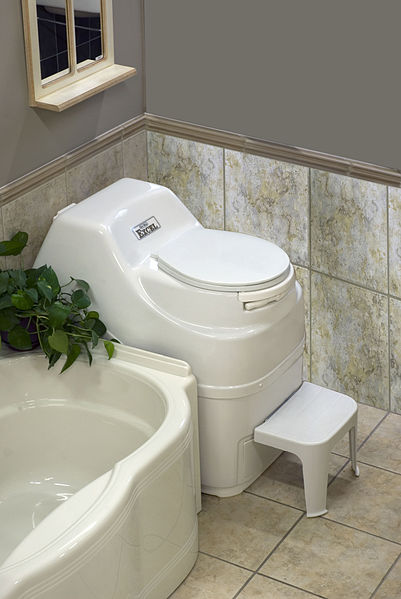
A composting toilet is an aerobic processing system that treats excreta, typically with no water or small volumes of flush water, via composting or managed aerobic decomposition. This is usually a faster process than the anaerobic decomposition at work in most wastewater systems, such as septic systems.

Composting toilets are often used as an alternative to central wastewater treatment plants (sewers) or septic systems. Typically they are chosen (1) to alleviate the need for water to flush toilets, (2) to avoid discharging nutrients and/or potential pathogens into environmentally sensitive areas, or (3) to capture nutrients in human excreta. Several manufactured composting toilet models are on the market, and construct-it-yourself systems are also popular.

These should not be confused with pit latrines, all of which are forms of less controlled decomposition, and may not protect ground water from nutrient or pathogen contamination or provide optimal nutrient recycling.

Types


Manufactured composting toilet systems


Self-contained composting toilets complete or begin the composting in a container within the receiving fixture. Remote, central, or underfloor units collect excreta via a toilet stool, either waterless or micro-flush, from which it drains to a composter. Vacuum-flush systems can flush horizontally or upward with a small amount of water to the composter. Micro-flush toilets use a small amount of water usually 1 pint (.5 liter) per use.

Self-contained composting toilets are slightly larger than a flush toilet, but use roughly the same floor space. Some units use fans for aeration, and optionally, heating elements to maintain optimum temperatures to hasten the composting process and to evaporate urine and other moisture. Operators of composting toilets commonly add a small amount of absorbent carbon material (such as untreated sawdust, coconut coir, peat moss) after each use to create air pockets for better aerobic processing, to absorb liquid, and to create an odor barrier. This additive is sometimes referred to as bulking agent. Some owner-operators use microbial starter cultures to ensure composting bacteria are in the process, although this is not critical.

Remote, central, and under-floor models each feature a chamber below the toilet stool (such as in a basement or outside) where composting takes place. These are typically used for high-volume and year-round applications as well as to serve multiple toilet stools. Several systems are available as well as many build-it-yourself options. (See Youtube Video Below)

Build-it-yourself, site-built, and owner-built design


Site-built indoor composting toilet designs vary, ranging from rollaway containers fitted with aerators to large concrete sloped-bottom tanks.

These are not to be confused with direct outdoor composting, which typically uses a collector bucket, where each deposit is covered with sawdust or other dry organic material, with the collector periodically being hand transported to an outdoor composting bin, where it may be added to yard waste or other organic material being composted.

Operating Process


Although there are many designs, the process factors at work are the same. Rapid aerobic composting will be thermophilic decomposition in which bacteria that thrive at high temperatures (104-140 °F) oxidizes (breaks down) the waste into its components, some of which are consumed in the process, reducing volume, and eliminating potential pathogens.

Drainage of excess liquid or leachate via a separate drain at the bottom of the composter is featured in some manufactured units, as the aerobic composting process requires moisture levels to be controlled (ideally 50%): too dry, and the mass decomposes slowly or not at all; too wet and anaerobic organisms thrive, creating undesirable odors. This separated liquid may be diverted to a graywater system or collected for other uses.


An approach that is becoming more common is the dry toilet, or urine-separating toilet. Where solar heat is used, this might be called a solar toilet. These systems depend on desiccation to achieve sanitation safety goals features systems that make use of the separated liquid fraction for immediate area fertilization.

Urine can contain up to 90 percent of the nitrogen, up to 50 percent of the phosphorus and up to 70 percent of the potassium present in human excreta. In healthy individuals it is usually pathogen free, although undiluted it may contain levels of inorganic salts and organic compounds at levels toxic to plants.

The other requirement critical for microbial action (as well as drying) is oxygen. Commercial systems provide methods of ventilation that move air from the room, through the waste container, and out a vertical pipe, venting above the enclosure roof. This air movement (via convection or fan forced) will vent carbon dioxide and odors.

Most units require manual methods for periodic aeration of the solid mass such as rotating a drum inside the unit or working an "aerator rake" through the mass. Composting toilet brands have different provisions for emptying the finished product, and supply a range of capacities based on volume of use. Frequency of emptying will depend on the speed of the decomposition process and capacity, from a few months (active hot composting) to years (passive, cold composting). With a properly sized and managed unit, a very small volume (about 10% of inputs) of a humus-like material results, which can be suitable as soil amendment for agriculture, depending on local public health regulations.


SubscribeShare/Save/Bookmark

November 18, 2009

Dealing with Waste in an Emergency

One subject that probably isn't talked about enough is sanitation. As preppers we are preparing for the likelihood of being without a food and water source. We have our water stored for cooking and drinking but what about sanitation? All the conventional ways of getting rid of human waste rely on electricity and most importantly, running water. Without these sanitation is going to become a real issue in an emergency situation, especially if it's a situation that's going to last a while.

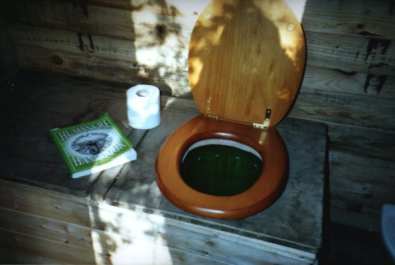
This is something that homeowners should be concerned with. How are you going to get rid of your waste without being able to flush the toilet? Probably the best option for homesteaders and preppers alike is building a working outhouse. People used outhouses for years. They could be a good thing if the grid ever went down. To build an outhouse you first want to choose a location that is 50 - 150 ft. from your home. This is to keep the smell at a minimum. A hole should be dug around 5 ft. deep and up to 3 ft. in diameter. A small building should be constructed on top of the the hole. Vent pipes should be ran from the pit to on top of the roof to vent the methane gas that would build up.

It might seem pretty primitive but if the grid went down it's going to be one of your only options to get rid of your waste. A well built outhouse would last years and with a 5 ft. deep pit your going to always be in a constant cycle of decomposition which shouldn't ever fill up. The outhouse would need to be well built and sealed up good around the pit itself. Outhouse specific toilet seats can be purchased to seal the pit and keep bugs and the smell down as much as possible. When people used outhouses they would sprinkle lime into the pit to aid in decomposition along with keeping the smell down. If you are a homesteader, you might want to look into building one of these if you expect the grid to go down for any length of time. Below is a diagram of an outhouse to give you an idea of how to build one.


SubscribeShare/Save/Bookmark

November 12, 2009

Practical Prepardness


The type of preparedness that the preppers all across the internet are trying to teach is practical preparedness. The tips and tricks and how to's posted here and on other sites isn't radical or crazy. It's practical and useful information to help you get through a disaster, whether natural or man made, with a lot less stress. The things that we recommend along the lines of getting prepared are not a waste of money, and ultimately if a disaster never came you would just be able to use the stuff you stocked up on.

But you don't want to just stock up a few things for a disaster and let them sit in a closet. The idea is that you can, over time, build up a rotating stock of nearly all your preps to rotate with the things you use on a daily basis. This especially goes for things that have long shelf lives. For example batteries. Batteries have a long shelf life and they're something that we all use on a day to day basis. Batteries can be purchased in bulk from online suppliers at half the price of batteries you can buy in the store. The batteries then can be stored and used in your electronics. You purchase enough of them to last you a year or even longer and don't buy anymore at store prices. When the stock starts getting lower just purchase more batteries to replenish it, but make sure you use the older batteries first before getting into the new ones.


This principle can be used for a lot of your food items and many other things that you would need in an emergency and might not be able to go out and get. This isn't something that you're going to be able to accomplish in a week or even a month but over time you can build up a storage of nearly everything that you use and eat. Once the principle is set into play, you can make a lot less frequent shopping trips. Only shop when things are on sale and shop online to find the best deals. Store up what you use so in the event of a disaster or emergency you can continue on with business as usual. No rushing to the store for last minute food items.

If the disaster never comes, you haven't lost anything. You will save money by using this method on food and other items you might need during a disaster. The ultimate goal is to be able to have almost all of your daily use things from food to hygiene products stocked up. Saving money while doing this is accomplished by buying in bulk, buying off the internet, using coupons, and buying things on sale. Just like I illustrated with the battery example, you can get batteries for cheap and never purchase them for retail in the store. This over time will save you money (granted the initial investment will be more). This is what being a prepper is all about. This will allow you to get through just about any disaster while stuck in your home.

SubscribeShare/Save/Bookmark

November 5, 2009

The Many Uses for Buckets

I was planning on doing a post about the many uses for buckets and how your average prepper can benefit greatly from their use, but Kellene beat me to the punch and did a great article on this very same subject over at Preparedness Pro. So rather than beat a dead horse you can check out Kellene's post for some great information on using buckets as a part of your preps. As she writes buckets are a great way to store not only your food items but other preparedness items including hygiene and first aid items. Make sure you head over and check out her post.

Click here to view the post.

SubscribeShare/Save/Bookmark

November 3, 2009

Best Weapon for Home Defense

Home defense is something we all should be concerned with. Whether you live in an apartment, own a home, or live with your parents; being prepared to defend the home in the event of an invasion is very important. There are precautionary measures you can take when dealing with home defense. I talked about one in my previous post about reinforcing entry doors. This is an important part of home defense because if your door can't be kicked in the likelihood of a break in drops dramatically.

As far as weapons go the best weapon for home defense is a shotgun. Shotguns are cheap, powerful, and easy to use. The biggest advantage of using a shotgun for home defense is the low muzzle velocity. The shotgun rounds are less likely to go through walls and potentially harm family members or neighbors. Shotgun rounds have a spread which makes hitting the target easier. Shotguns also have a fear factor to them. Most intruders will run for the hills when they hear you chamber a round.

I don't condone the use of violence, but if someone breaks into your home you have the right to defend yourself and your family. A shotgun is your best bet when wanting to cover home defense. Shotguns are also cheap and will last forever if taken care of. A used 12 gauge shotgun can be had for $200. A few boxes of shells and you're ready to defend your home. Make sure you get some practice with it at the range to know how to operate it and effectively use it.

SubscribeShare/Save/Bookmark

October 23, 2009

Rakes, Shovels, and Hoes

There are many people out there who have a food storage and other preps put back, along with a seed bank for potential growing in the event of food shortages or a disaster that disrupts the food supply. This isn't a bad thing to do but you need to have the things stored that you would need to work your garden. The only problem with this concept is that even if you've read every book on gardening and think you know exactly what to do, to truly know how to garden and grow food successfully you have to have the experience.

Leaving your potential survival garden to chance is something you don't want to do. Get started now while you can still learn by trial and error. No matter how much knowledge you have about gardening things can still come up and ruin all the effort you put into it. BUT if you do plan on storing up a lot of food, you can use your food storage as a backup while you work to get your garden to produce. Either way you need to have the tools you need to work the garden to produce your food.

Rakes, hoes, shovels, and any gardening tools need to be purchased now and stored. If you already have most of these tools then buy an extra one. If your shovel breaks and you can't go out and buy a new one you will regret not purchasing a backup. A seed pack is also important to have. Most of the "survival seed vaults" you can buy include years worth of heirloom, non-hybrid seeds. This means you can extract the seeds from your harvest and plant them the following year.

As a prepper you want to cover all the bases and if you don't have an item stocked up, keep a backup. This especially goes for your gardening supplies if you plan on having a garden in the future. A fence around the garden to keep pests out is also important so keeping a bundle of fence would be a good idea because you can't rely on the stores having these things in the event of a disaster. Watering the garden would also be an issue but setting up a Rain Barrel System would allow you to water the garden without dipping into your water storage for your family.

SubscribeShare/Save/Bookmark

October 6, 2009

How to Reinforce An Entry Door

Your home is something that needs to be secure and safe. One of the most important factors in the security of your home is the strength of the entry doors. Burglars who break into homes look for the quickest and easiest way. Most doors can be kicked down with 3 kicks, and in 3 - 5 minutes the criminal is in and out. If a criminal is unable to take down the door with 3 kicks they will usually move onto the next house. With the average police response time at 20 minutes, it's important to make sure your doors are secure.

Whether in a bug in situation or just wanting to keep criminals out it's important to secure your doors. For starters, entry doors need to be solid wood or metal doors with little to no glass and feature a quality deadbolt. Glass might be pretty and decorative but it does nothing for your security. Glass is easily broken and can allow a criminal to get right in. The door frame itself is something that needs to be closely inspected. Most contractors skimp when it comes to securing the door frame to the wall and this can be a critical weak point in the door. The deadbolt might hold but if the frame doesn't hold it comes down just as easy. If you don't think the contractor used enough screws, get some 3 inch wood screws and add them all around the frame.

A beefed up striker plate should also be added along with 3 inch wood screws. Most stock hardware comes with weak 1 inch screws. Replace these with 3 inch wood screws that go all the way into the wall framing. Do the same for the hinges. Replace all the stock screws on the hinges with 3 inch wood screws for added strength. Additionally a door lock guard and striker plate guard can also be purchased to further reinforce the lock from coming out of the door itself and keeping the deadbolt inside the door frame.

A reinforced entry door isn't going to hold up to a battering ram, but could buy you some time and allow you and your family to get to a safe room and get yourself armed. These are some simple and cheap tips that can be used on any door at all entry points of the house. Protecting your home and family should be the number one priority and making sure the doors are secure is the first step in securing their safety.

For more information check out the following videos:


SubscribeShare/Save/Bookmark

August 19, 2009

Should A Generator Be A Part of Your Preps?

A lot of people want to consider a generator as part of their preparedness plan. And to a lot of those people, it's their only form of preparedness. Generators are expensive to buy, and expensive to run. They're only good in the short term, and that's IF you have enough gas for it. So I'm not condemning you for owning a generator but don't look at it as a big part of your preps.

The most important part of prepping is being prepared to get by without a generator. You can't rely on gas stations because they require electricity to pump the gas. So unless you have an unlimited supply of gasoline it will only run so long. If you would like to purchase a generator don't buy one until you are fully prepared to get by long term without one. Only then would it be a good idea to buy one(and only if you have the money).

A generator is only useful in the short term and it will only run as long as you have gas. In any extended outage or disaster your $1,000 generator will be useless. You will be wishing you had spent that money on more food, batteries, or anything you might need in the event of a long term power outage. If you do have a generator, and at least a 3 month supply to get you through independent of the generator then I would suggest you keep at least 25 gallons of gas on hand with your generator. You can rotate the gas in your vehicles to keep it from going bad.

We have a generator and it has helped out in short-term, localized emergencies and disasters but just because you own one doesn't mean you're prepared. Prepare to get by without the generator then buy one if you think it might help you. And make sure you have enough gas on hand to run it for at least a couple days. A generator is good to keep your refrigerator and freezer cold to prevent losing a lot of your food. But make sure you have a backup plan, with at least a 3 month food supply that doesn't need to be frozen or refrigerated.

SubscribeShare/Save/Bookmark